Jake Dyson: Career, Inventions and the James Dyson Legacy
From independent lighting innovator to Dyson’s Chief Engineer, Jake Dyson has built a distinctive engineering career while helping shape the future of the technology company founded by his father, James Dyson.

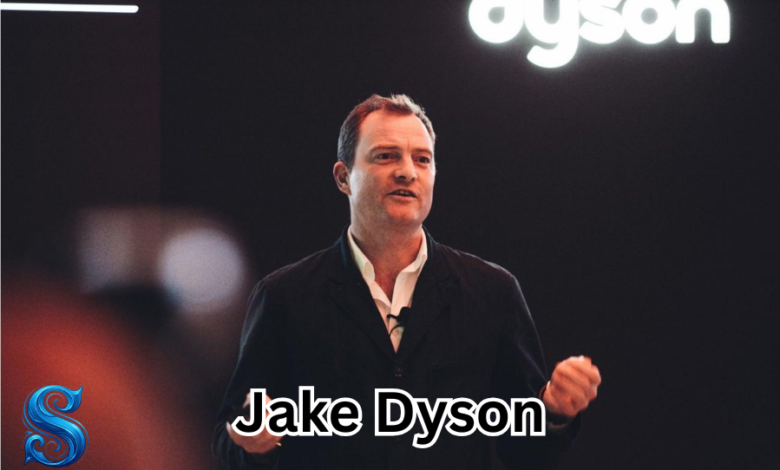
Jake Dyson is a British industrial designer, engineer, inventor, and the current Chief Engineer at Dyson. He is also the eldest son of Sir James Dyson, the celebrated British inventor and entrepreneur who founded the global technology company. However, Jake did not begin his career by simply entering the family business. He built an independent reputation through lighting design, LED engineering, and his own company before eventually joining Dyson. Today, his responsibilities include core innovation, new product development, software connectivity, and future technologies across the company’s international engineering teams.
Quick Bio
| Detail | Information |
|---|---|
| Full Name | Jake Dyson |
| Profession | Industrial Designer, Engineer, Inventor |
| Nationality | British |
| Known For | Chief Engineer at Dyson, Jake Dyson Light |
| Father | Sir James Dyson |
| Education | Product Design, Central Saint Martins |
| Former Company | Jake Dyson Light |
| Joined Dyson | 2015 |
| Current Role | Chief Engineer at Dyson |
| Expertise | Product Design, LED Lighting, Engineering, Innovation |
| Notable Work | Motorlight, CSYS Lighting, Dyson technology development |
| Industry | Technology & Industrial Design |
Who Is Jake Dyson?
Jake Dyson grew up surrounded by engineering, experimentation, and product development. His father, James Dyson, spent years developing inventions and repeatedly testing prototypes, giving Jake an unusually close view of the practical realities behind industrial design.
According to Dyson’s official biography, Jake developed engineering skills from an early age in his father’s workshop in Bathford, England. He later studied Product Design at Central Saint Martins in London, one of Britain’s best-known institutions for art and design.
Despite his family connection to a major technology business, Jake initially followed his own professional path. That decision became important to his identity as an engineer because it allowed him to experience the pressures of creating, manufacturing, marketing, and selling products independently.
His career eventually brought him back into the wider Dyson organisation, but only after he had established his own design philosophy and technological expertise.
Jake Dyson’s Early Career and Education
After studying Product Design at Central Saint Martins, Jake worked in design and became particularly interested in the influence of lighting on interior environments.
He believed that lighting was often treated as a decorative afterthought rather than an engineering problem. Instead of focusing only on the external appearance of lamps, he became interested in the mechanics of producing better-quality, longer-lasting light.
In 2004, he established a small London workshop and began developing commercial lighting products. His early work included the Motorlight, a mechanically adjustable light that reflected his preference for combining visible engineering with functional design.
Building his own company also meant dealing with challenges beyond product design. Jake has discussed how running an independent studio required involvement in manufacturing, sales, marketing, development, and international distribution.
This experience differentiated his career from someone who had simply inherited a senior position inside an established family company.
Jake Dyson Light and His LED Breakthrough
Jake Dyson became particularly recognised for his work on LED lighting.
LEDs already offered significant advantages over older incandescent and halogen bulbs, but Jake identified heat management as a major technical problem. Excessive heat can gradually reduce LED brightness and affect colour consistency.
Rather than accepting this limitation, his team investigated methods of moving heat away from the LED.
One of the most important solutions was heat-pipe technology. Similar principles have been used in computers and satellites to transfer heat efficiently. Jake adapted the concept for lighting, allowing heat generated by LEDs to move away from the light source and dissipate through the structure of the lamp.
This approach contributed to the development of the CSYS task-light range. Dyson stated that the technology could preserve LED performance for decades, dramatically reducing the need for replacement.
Jake’s lighting portfolio also included products such as the Cu-Beam suspended light, which applied related engineering principles to architectural environments.
The significance of these products was not simply their appearance. They demonstrated Jake Dyson’s central design philosophy: identify a technical weakness, understand its cause, and redesign the system rather than hiding the problem.
Why Dyson Acquired Jake Dyson Light
Jake Dyson Light became part of Dyson in 2015, bringing Jake’s lighting technology and team into the wider business.
Dyson describes 2015 as the year Jake’s disruptive lighting technology was brought under the company umbrella. The move added lighting to Dyson’s expanding portfolio and gave Jake access to significantly larger engineering, research, manufacturing, and development resources.
The integration also marked an important turning point in his career.
Jake had already spent roughly a decade building his own lighting operation. Joining Dyson therefore represented a combination of two engineering paths rather than the beginning of his professional life.
His expertise in LEDs, cooling systems, precision mechanics, and product development fitted naturally with Dyson’s broader engineering culture.
Jake Dyson’s Role as Chief Engineer at Dyson
Jake Dyson now serves as Chief Engineer at Dyson.
His official responsibilities include core innovation, future technology, new product development, and software connectivity. He works closely with engineering teams in major Dyson locations, including the UK and Singapore.
His position extends well beyond the lighting products that first made him widely known.
Modern Dyson machines increasingly combine mechanical engineering with sensors, software, data processing, connectivity, robotics, and intelligent control systems. Jake has publicly discussed the importance of software becoming a central part of the company’s future products.
That shift reflects how consumer technology has changed. A modern appliance is no longer necessarily a purely mechanical object. It can collect information, respond to conditions, communicate through an application, and potentially improve its performance through increasingly sophisticated software.
Jake’s leadership therefore sits at the intersection of traditional industrial engineering and a more connected technological future.
Jake Dyson and James Dyson
The relationship between Jake Dyson and James Dyson naturally attracts attention because both men have built careers around invention and engineering.
James Dyson is famous for challenging conventional product categories and spending years developing solutions when existing designs failed to meet his expectations. Jake grew up watching that process firsthand.
However, Jake deliberately spent the early part of his career building a company outside Dyson.
In a previous interview, he explained that his father was professionally hands-off while Jake developed his own studio, forcing him to make his own decisions and mistakes.
Their engineering philosophies nevertheless share obvious similarities.
Both focus on identifying overlooked problems, experimenting repeatedly, and treating technical performance as an essential part of good design.
Today, Jake works closely with his father on Dyson’s long-term innovation and product strategy. Dyson’s official profile describes the pair as working together while Jake leads teams involved in developing new products and future technologies.
Rather than simply continuing James Dyson’s earlier work, Jake appears focused on applying similar principles to emerging areas such as software, connected machines, robotics, audio, and intelligent technology.
Jake Dyson’s “Less Is More” Design Philosophy
One of Jake Dyson’s most clearly expressed principles is a preference for minimalism.
His approach is essentially “less is more”: products should be compact, lightweight, functional, and visually precise.
For Jake, minimalism does not mean removing features simply to achieve a cleaner appearance. Instead, unnecessary complexity should disappear because the engineering itself has become more efficient.
Dyson’s official biography describes his emphasis on precision engineering, simple functionality, reduced weight, and making products occupy only the space genuinely required.
This thinking can be seen across his lighting work, where mechanical structures often serve both technical and visual purposes.
It also aligns with the broader challenge facing modern consumer electronics: adding intelligence and capability without making products unnecessarily complicated for users.
Jake Dyson and Dyson’s Expansion Into Audio Technology
Jake has also become a prominent figure in Dyson’s move into audio.
The Dyson Zone combined noise-cancelling headphones with personal air-purification technology, reflecting the company’s willingness to combine previously separate product categories. Jake described the machine as an attempt to address both urban air pollution and unwanted noise.
Dyson later launched the OnTrac headphones in 2024 as its first audio-only headphones.
The OnTrac project focused on active noise cancellation, an extended frequency range, long battery life, comfort, and customisable external components. At launch, Jake presented the product as part of Dyson’s wider experience with acoustics and engineering.
His involvement in these products demonstrates how far his responsibilities have expanded beyond lighting.
Jake Dyson’s Influence on Future Technology
Jake Dyson’s current work increasingly focuses on what consumer technology may become rather than simply improving familiar appliances.
Software connectivity is one major area. Robotics and artificial intelligence are another.
In 2026, Jake discussed the potential for increasingly capable domestic robots and AI-supported machines, indicating that intelligent automation is becoming an important part of the company’s future thinking.
His career therefore shows a clear progression: mechanical lighting, advanced LED thermal management, global product development, software-connected appliances, audio engineering, and emerging intelligent systems.
The common thread is problem-solving rather than loyalty to one specific product category.
Conclusion
Jake Dyson has developed a career that is closely connected to James Dyson while remaining distinctive in its own right. His independent work with Jake Dyson Light established his reputation in industrial design and LED engineering before the business became part of Dyson in 2015.
Today, Jake Dyson serves as Chief Engineer, helping guide work in core innovation, new products, connectivity, software, audio, and future technologies. His journey illustrates how the Dyson family’s engineering philosophy is evolving from primarily mechanical invention toward increasingly connected and intelligent products.
For Jake, the James Dyson legacy appears to be less about reproducing his father’s inventions and more about continuing the habit of questioning established solutions.
FAQs
Who is Jake Dyson?
Jake Dyson is a British industrial designer, inventor, and Chief Engineer at Dyson. He previously founded his own lighting company, Jake Dyson Light, where he became known for developing advanced LED cooling technology. He now works on innovation, product development, connectivity, software, and future technology within Dyson’s global engineering organisation.
Is Jake Dyson related to James Dyson?
Yes. Jake Dyson is the son of Sir James Dyson, the British inventor, entrepreneur, and founder of Dyson. Although he grew up around his father’s engineering work, Jake initially developed an independent career and ran his own lighting company before formally becoming a major part of Dyson’s engineering leadership.
What did Jake Dyson invent?
Jake Dyson is especially known for advanced lighting systems, including the Motorlight and CSYS task lights. His most notable technical work involved using heat-pipe technology to move heat away from LEDs, helping preserve brightness and colour consistency for decades. He has since contributed to wider Dyson technology and product development.
When did Jake Dyson join Dyson?
Jake Dyson’s lighting business became part of Dyson in 2015. Before that, he had spent years independently developing and manufacturing lighting products. The integration brought his LED technology and design expertise into Dyson and eventually helped establish him as a senior engineering leader within the company.
What is Jake Dyson’s role at Dyson?
Jake Dyson currently serves as Chief Engineer. His responsibilities include core technological innovation, new product development, software connectivity, and future technology. He also works alongside James Dyson and engineering teams in different international locations as the company develops new generations of consumer technology.
What is Jake Dyson’s design philosophy?
Jake Dyson follows a minimalist, functionality-first approach. He believes products should be technically better while remaining compact, lightweight, precise, and simple to use. Rather than adding design elements purely for appearance, his philosophy encourages engineering components to serve a clear purpose while contributing naturally to the finished product.
Will Jake Dyson take over from James Dyson?
Jake Dyson plays an important long-term role in Dyson and works closely with James Dyson, but it would be inaccurate to treat succession as a confirmed outcome unless the company formally announces such a plan. His current position is Chief Engineer, with a strong focus on innovation and future product technology rather than simply acting as his father’s replacement.
For readers interested in modern British engineering and entrepreneurship, Jake Dyson’s career offers a useful example of how independent experience, family influence, experimentation, and long-term technological thinking can come together to shape the next generation of innovation.
READ THIS TOO: Touker Suleyman: Net Worth, Career, Businesses and Dragons’ Den Exit

One Comment