
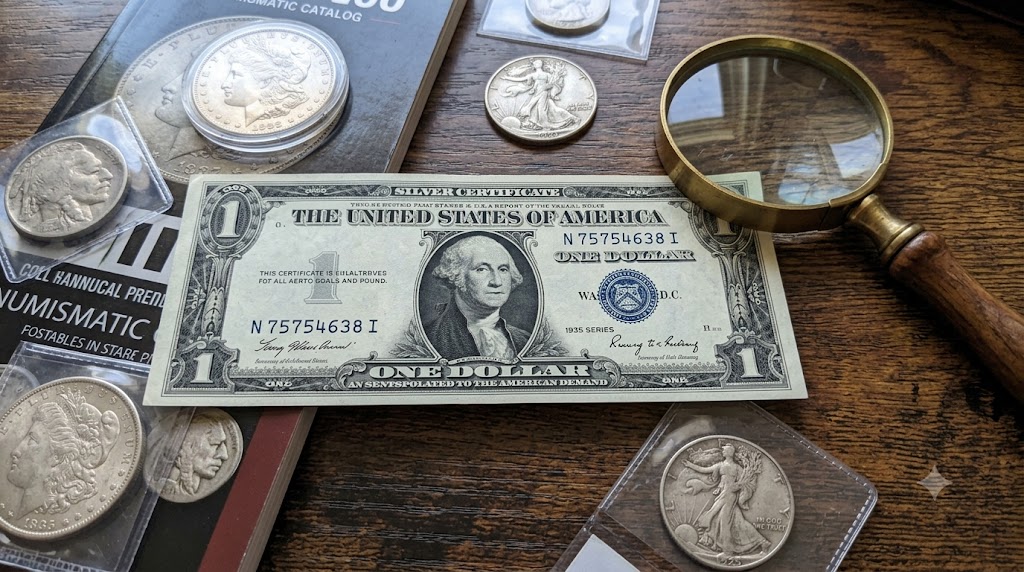
1935 Dollar Bill Silver Certificate Value: Complete Collector’s Price Guide
Introduction
The 1935 dollar bill silver certificate value typically ranges from $2 to $15 for circulated notes, while well-preserved or uncirculated examples often sell for $20 to $100 or more. Rare star notes, low serial numbers, unique printing errors, and exceptional condition can increase the value significantly. If you’ve recently discovered a 1935 Silver Certificate, understanding its series, condition, and rarity is the key to estimating its true market value.
What Is a 1935 Dollar Bill Silver Certificate?
The 1935 Silver Certificate is a United States one-dollar banknote issued when paper currency could still be redeemed for silver. These notes feature the familiar portrait of George Washington on the front and the distinctive blue Treasury seal and serial numbers that set Silver Certificates apart from regular Federal Reserve Notes.
Although they are no longer redeemable for silver, they remain legal tender and are highly collectible among currency enthusiasts.
Collectors appreciate these notes because they represent an important period in American monetary history.
1935 Dollar Bill Silver Certificate Value Today
The value of a 1935 Silver Certificate depends on several factors rather than just its age.
Here is a general price guide:
| Condition | Estimated Value |
|---|---|
| Heavily Circulated | $2–$5 |
| Average Circulated | $5–$10 |
| Lightly Circulated | $10–$20 |
| Uncirculated | $20–$100+ |
| Rare Star Notes | $50–$500+ |
| Error Notes | $100–$1,000+ |
These values are approximate and may vary depending on collector demand and auction results.
Factors That Affect the Value
Condition
Condition is often the biggest factor affecting price.
Collectors use grading standards ranging from Poor to Gem Uncirculated. A crisp note with no folds, tears, stains, or writing is considerably more valuable than one showing heavy wear.
Characteristics of valuable notes include:
- Sharp corners
- Bright paper
- Original crispness
- Strong ink color
- Minimal handling
Professional grading services can authenticate and assign a condition grade, increasing buyer confidence.
Series Letter
Many people don’t realize there are several versions of the 1935 Silver Certificate.
Common series include:
- 1935
- 1935A
- 1935B
- 1935C
- 1935D
- 1935E
- 1935F
- 1935G
- 1935H
Most are relatively common, but some series attract stronger collector interest depending on printing quantities and survival rates.
Star Notes
A star note replaces a misprinted bill during production.
Instead of ending with a regular letter, the serial number ends with a star (*).
Star notes are usually scarcer than standard issues, making them more desirable.
An uncirculated 1935 star note can sell for several hundred dollars, especially if it belongs to a low-print run.
Serial Numbers
Certain serial numbers are especially collectible.
Examples include:
- Low serial numbers (00000001–00000100)
- Solid numbers (11111111)
- Ladder numbers (12345678)
- Radar numbers (12344321)
- Repeater numbers
- Binary serial numbers
A rare serial number can increase value dramatically, even on a common 1935 issue.
Printing Errors
Printing mistakes are uncommon and highly sought after.
Examples include:
- Misaligned printing
- Missing seals
- Offset printing
- Ink smears
- Double printing
- Fold-over errors
Error notes often command premium prices because every mistake is unique.
if you want to know, Entertainment Business Ideas, click here.
Are All 1935 Silver Certificates Valuable?
No. While every 1935 Silver Certificate has collectible value beyond its face value, most common circulated notes are worth only a few dollars.
Many people assume that because a bill is nearly a century old, it must be worth hundreds or thousands of dollars. In reality, millions were printed, and many still exist today.
The biggest premiums usually come from:
- Exceptional condition
- Rare serial numbers
- Star notes
- Printing errors
- Professional grading
Without one of these features, most examples remain affordable collectibles.
How to Identify a Valuable 1935 Silver Certificate
Before selling your note, inspect it carefully.
Look for:
- Blue Treasury seal
- Blue serial numbers
- Star after the serial number
- Series designation
- Unusual serial numbers
- Printing errors
- Paper quality
- Sharp corners
Using proper lighting and a magnifying glass can help identify details that influence value.
Should You Get It Professionally Graded?
Professional grading isn’t necessary for every note.
However, grading may be worthwhile if your bill appears to have:
- No folds
- Rare serial numbers
- A star designation
- Printing errors
- Outstanding preservation
Graded notes generally attract more serious collectors and often sell for higher prices because buyers trust independent authentication.
Where Can You Sell a 1935 Silver Certificate?
If you decide to sell your note, several options are available.
Popular choices include:
- Coin and currency dealers
- Currency auctions
- Online marketplaces
- Estate sales
- Coin shows
- Collector forums
Before accepting an offer, compare recent sales of similar notes in the same condition.
Obtaining multiple opinions can help ensure you receive a fair market price.
Tips for Preserving Your Silver Certificate
Proper storage helps maintain both appearance and value.
Follow these best practices:
- Store in acid-free currency sleeves.
- Keep away from sunlight.
- Avoid folding the note.
- Handle with clean, dry hands.
- Store in a cool, dry location.
- Never laminate the bill.
Good preservation protects your investment and keeps the note attractive to future collectors.
Frequently Asked Questions
1. How much is a 1935 dollar bill silver certificate worth today?
Most circulated examples are worth between $2 and $15. Uncirculated notes commonly sell for $20 to $100 or more, while rare star notes and printing errors may be worth several hundred dollars depending on rarity and condition.
2. Are all 1935 Silver Certificates rare?
No. Millions were printed, making standard examples relatively common. However, certain star notes, rare serial numbers, and error notes are much scarcer and significantly more valuable.
3. How can I tell if my 1935 Silver Certificate is valuable?
Check its condition, series letter, serial number, and whether it is a star note. Printing errors and exceptionally crisp notes generally command higher prices than ordinary circulated examples.
4. Can I still spend a 1935 Silver Certificate?
Yes. It remains legal tender with a face value of one dollar. However, collectors usually pay more than face value, making it wiser to sell it rather than spend it.
5. Should I clean my old Silver Certificate?
No. Cleaning or attempting to improve the appearance of a collectible note can reduce its value. Collectors prefer notes in their original condition, even if they show natural aging.
Conclusion
The 1935 dollar bill silver certificate value depends on much more than its age. While most circulated notes are worth only a few dollars above face value, rare star notes, exceptional condition, unique serial numbers, and printing errors can make a significant difference. If you own one of these historic bills, examine it carefully before selling or storing it. Learning how collectors evaluate Silver Certificates will help you determine whether your note is a common keepsake or a valuable collectible worth preserving.





One Comment