Heat Rash: How Long Does It Take to Go Away? Causes, Treatment, and Prevention
Introduction
If you’re wondering heat rash: how long does it take to go away, the answer is that most mild cases clear up within a few hours to three days once your skin is cooled and kept dry. Heat rash, also called prickly heat or sweat rash, develops when sweat ducts become blocked, trapping perspiration beneath the skin. While it is usually harmless, proper care can speed recovery and reduce discomfort. Understanding what causes heat rash, how to treat it, and when to seek medical attention can help you heal quickly and prevent future flare-ups.
Heat Rash: How Long Does It Take to Go Away?
The recovery time depends on the severity of the rash and how quickly the skin is removed from hot, humid conditions.
In most cases:
- Mild heat rash improves within several hours.
- Most cases resolve completely within one to three days.
- Moderate cases may take up to a week.
- Severe or infected heat rash may require medical treatment and a longer recovery period.
The key to faster healing is reducing sweating and allowing blocked sweat glands to recover.
If the rash continues beyond a week or becomes increasingly painful, it’s important to consult a healthcare professional.
What Is Heat Rash?
Heat rash occurs when sweat becomes trapped beneath the skin because sweat ducts are blocked.
It commonly develops during:
- Hot weather
- High humidity
- Intense exercise
- Wearing tight or non-breathable clothing
- Prolonged bed rest with excessive sweating
Infants are especially prone to heat rash because their sweat glands are still developing, but adults can also experience it during warm conditions.
Common Types of Heat Rash
Different forms of heat rash vary in severity.
Miliaria crystallina
This is the mildest form and appears as tiny, clear blisters that break easily. It usually heals very quickly.
Miliaria rubra
Often called prickly heat, this type causes red bumps, itching, and a prickling or stinging sensation.
Miliaria profunda
This less common form affects deeper skin layers and may require medical evaluation if symptoms persist.
Symptoms of Heat Rash
Heat rash symptoms can vary depending on the type.
Common signs include:
- Small red bumps
- Tiny fluid-filled blisters
- Itching
- Prickling sensation
- Mild swelling
- Skin irritation
- Burning discomfort
The rash usually appears on areas where sweat becomes trapped, including:
- Neck
- Chest
- Back
- Under the breasts
- Groin
- Elbows
- Armpits
- Waistline
How to Treat Heat Rash at Home
Most cases improve with simple self-care measures.
Cool the Skin
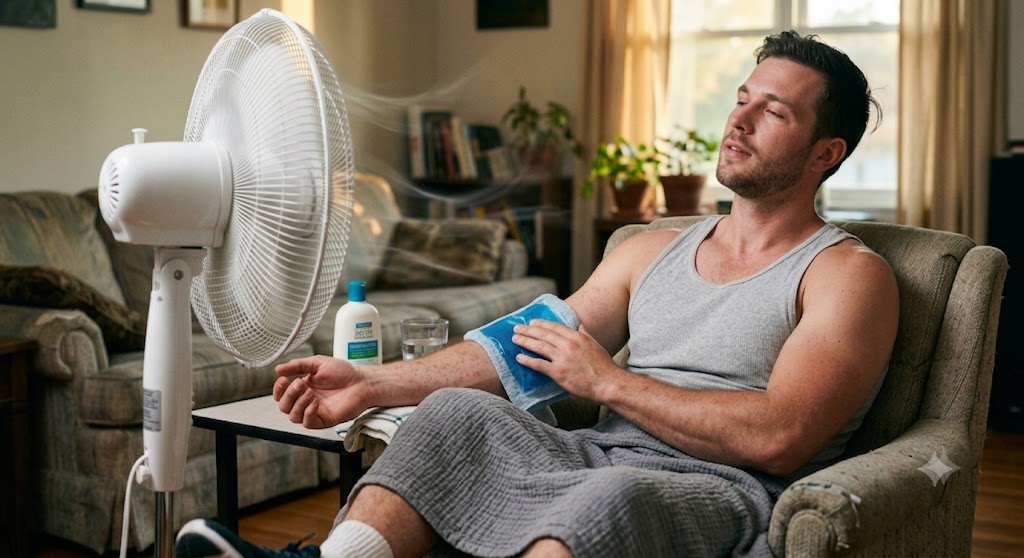
Move to an air-conditioned or shaded area as soon as possible.
A cool shower or bath can lower skin temperature and reduce sweating.
Cool compresses applied for 10 to 15 minutes several times daily may also relieve discomfort.
Keep the Skin Dry
Moisture can worsen blocked sweat glands.
Choose lightweight, loose-fitting cotton clothing and gently pat your skin dry after bathing or sweating.
Avoid Heavy Creams
Thick lotions and oil-based products may further block sweat ducts.
Instead, use lightweight, fragrance-free products if your skin feels dry.
Reduce Sweating
Until the rash heals:
- Limit strenuous exercise.
- Stay hydrated.
- Use fans or air conditioning.
- Avoid direct sunlight during the hottest part of the day.
These simple changes often allow the rash to resolve naturally.
Factors That Affect Healing Time
Several factors influence how quickly heat rash disappears.
Severity of the Rash
Mild cases recover rapidly, while deeper forms may take several additional days.
Continued Heat Exposure
Remaining in hot, humid environments slows healing because sweating continues to block sweat ducts.
Clothing Choices
Tight or synthetic fabrics trap heat and moisture, delaying recovery. Breathable cotton clothing promotes faster healing.
Skin Care Habits
Keeping the affected area clean and dry reduces irritation and supports the skin’s natural healing process.
When Should You See a Doctor?
Although heat rash is usually harmless, medical evaluation is recommended if symptoms worsen or fail to improve.
Seek medical attention if you notice:
- Fever
- Increasing pain
- Pus or drainage
- Severe swelling
- Expanding redness
- Rash lasting longer than one week
- Signs of infection
These symptoms may indicate a bacterial infection or another skin condition requiring treatment.
How to Prevent Heat Rash
Preventing heat rash is often easier than treating it.
Helpful prevention strategies include:
- Wear lightweight, breathable clothing.
- Stay in cool environments whenever possible.
- Drink plenty of water.
- Take breaks during outdoor activities.
- Shower after heavy sweating.
- Keep skin folds dry.
- Use fans or air conditioning during hot weather.
Parents can also reduce the risk in babies by avoiding overdressing and ensuring comfortable room temperatures.
Is Heat Rash Contagious?
Heat rash is not contagious.
It cannot spread from person to person through physical contact.
Because it develops from blocked sweat glands rather than bacteria or viruses, there is no need to isolate someone who has a heat rash.
However, scratching the rash excessively may damage the skin and increase the risk of infection.
FAQs
1. Can heat rash go away overnight?
Yes. Mild heat rash often improves overnight if you cool the skin, avoid sweating, and keep the affected area dry. More noticeable cases may require two or three days to heal completely.
2. Should I pop heat rash blisters?
No. Popping blisters can damage the skin and increase the risk of infection. It’s best to leave them intact while keeping the area clean, cool, and dry.
3. Can adults get heat rash?
Yes. Although heat rash is common in babies, adults frequently develop it during hot weather, intense exercise, or while wearing tight clothing that traps heat and sweat.
4. Does heat rash itch?
Yes. Many people experience itching, prickling, or a mild burning sensation. These symptoms usually improve as the skin cools and the blocked sweat glands begin to clear.
5. How can I tell if my heat rash is infected?
Signs of infection include worsening redness, increasing pain, swelling, warmth, pus, fever, or symptoms that persist beyond a week. If these occur, seek prompt medical evaluation for appropriate treatment.
Conclusion
If you’re asking heat rash: how long does it take to go away, the good news is that most cases resolve within a few hours to three days once your skin is cooled and protected from excessive heat and sweating. Prompt self-care, including staying cool, wearing breathable clothing, and keeping the skin dry, can speed recovery and prevent further irritation. If symptoms worsen, last longer than a week, or show signs of infection, consult a healthcare professional. By recognizing the early signs and taking preventive measures, you can reduce the likelihood of future heat rash and stay comfortable even during hot weather.
IF YOU WANT TO KNOW ABOUT, Benefits of Walking on an Incline for Fitness, CLICK HERE.