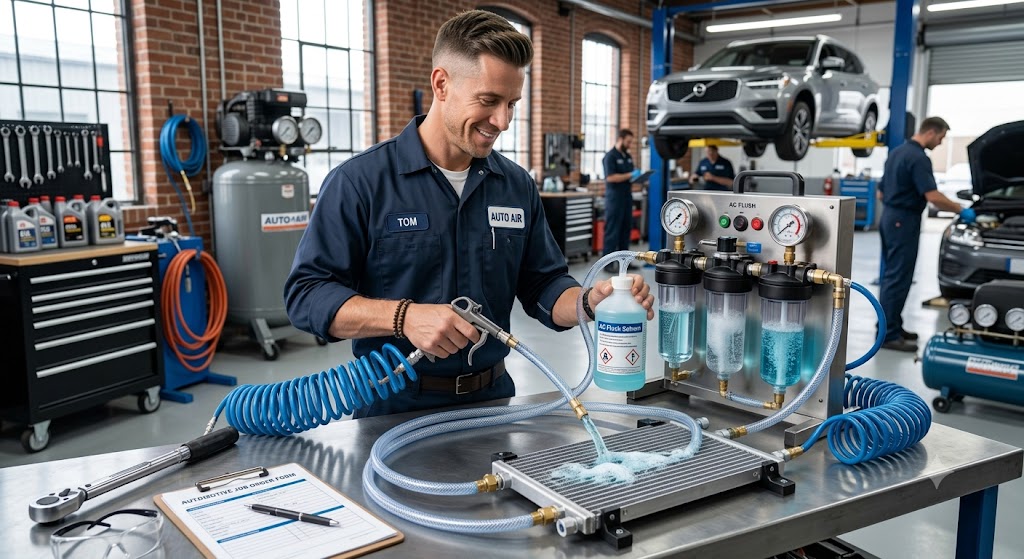
AC System Flush Solvent: What It Is, Why It Matters, and How to Use It Safely
Introduction
An AC system flush solvent is a specialized cleaning solution used to remove old compressor oil, debris, sludge, and contaminants from an automotive air conditioning system before replacing major components or recharging the refrigerant. Using the correct flush solvent helps restore system efficiency, protects the new compressor, and reduces the risk of costly future repairs. Whether you’re a DIY enthusiast or a professional technician, understanding when and how to use an AC flush solvent is essential for maintaining reliable cooling performance.
What Is an AC System Flush Solvent?
An AC system flush solvent is a fast-evaporating cleaning fluid specifically formulated for automotive air conditioning systems. Its primary purpose is to dissolve and remove contaminants that accumulate inside AC lines and components over time.
Unlike general-purpose cleaners, AC flush solvents leave little to no residue after evaporation, helping ensure the refrigerant and compressor oil circulate properly once the system is reassembled.
These solvents are commonly used during:
- Compressor replacement
- Major AC repairs
- System contamination cleanup
- Refrigerant conversion
- Preventive maintenance
Using the right solvent can significantly extend the lifespan of your air conditioning system.
Why Flushing an AC System Is Important
Over time, contaminants can build up inside the AC system and reduce its efficiency.
Common contaminants include:
- Burnt compressor oil
- Metal shavings
- Dirt and dust
- Moisture
- Sludge
- Rubber particles from deteriorating hoses
If these contaminants remain in the system, they can damage replacement parts, restrict refrigerant flow, and reduce cooling performance.
Flushing removes these harmful deposits before installing new components, helping prevent repeat failures.
If you want to know about, Optical Network Terminal Box, click here.
When Should You Use an AC System Flush Solvent?
Flushing isn’t necessary for every repair, but it is strongly recommended in several situations.
You should consider using an AC system flush solvent when:
- Replacing a failed compressor
- Repairing contamination caused by compressor failure
- Installing a new condenser or evaporator (when applicable)
- Removing debris after internal component damage
- Cleaning the system before adding fresh compressor oil
- Preparing the system for long-term reliability
However, certain components should generally be replaced rather than flushed, such as the receiver-drier or accumulator and many expansion devices.
Always follow the vehicle manufacturer’s service recommendations.
Components That Can Be Flushed
Not every AC component is suitable for flushing.
Typically, technicians flush:
- Refrigerant lines
- Metal hoses
- Evaporator cores
- Some condensers with serviceable designs
Components that are commonly replaced instead of flushed include:
- Compressors
- Receiver-driers
- Accumulators
- Expansion valves
- Orifice tubes
Attempting to flush sealed or damaged components may not remove contamination effectively.
How to Use an AC System Flush Solvent
Proper flushing requires the right tools and careful attention to safety.
A typical flushing process involves:
- Recover the refrigerant using approved equipment.
- Disconnect the component being cleaned.
- Fill a flush gun or flushing tool with the recommended solvent.
- Force the solvent through the component using compressed air or nitrogen.
- Continue flushing until the exiting solvent appears clean.
- Blow out any remaining solvent with dry compressed air or nitrogen.
- Allow the system to dry completely.
- Replace components that cannot be flushed.
- Add the correct amount of compressor oil.
- Evacuate the system with a vacuum pump before recharging it with refrigerant.
Taking the time to perform each step properly helps ensure the system operates efficiently after repair.
Choosing the Right AC System Flush Solvent
Not all flushing products perform the same way.
When selecting a solvent, look for these characteristics:
- Fast evaporation
- Residue-free formula
- Compatibility with modern refrigerants
- Non-corrosive ingredients
- Professional-grade cleaning performance
- Safe for aluminum AC components
Avoid using household cleaners, brake cleaner, mineral spirits, gasoline, or other non-approved chemicals, as they can damage seals and contaminate the air conditioning system.
Common Mistakes to Avoid
Improper flushing can lead to expensive repairs and reduced cooling performance.
Avoid these common mistakes:
- Using the wrong cleaning solvent
- Skipping the flushing process after compressor failure
- Leaving solvent inside the system
- Reusing contaminated compressor oil
- Failing to replace the receiver-drier or accumulator
- Charging the system without pulling a proper vacuum
- Ignoring manufacturer service procedures
Following recommended repair practices improves both reliability and cooling efficiency.
Benefits of Using an AC System Flush Solvent
Using an AC system flush solvent offers several important advantages.
These include:
- Removes harmful contaminants
- Protects replacement compressors
- Improves refrigerant circulation
- Restores cooling performance
- Reduces the risk of repeat compressor failure
- Helps maintain system efficiency
- Extends component lifespan
- Supports cleaner compressor oil circulation
Although flushing requires additional time, it often prevents much more expensive repairs later.
FAQs
1. What does an AC system flush solvent do?
An AC system flush solvent removes old oil, sludge, metal particles, and debris from automotive air conditioning components. This cleaning process helps protect new parts and restores efficient refrigerant flow after repairs.
2. Can I use brake cleaner as an AC flush solvent?
No. Brake cleaner and other general-purpose solvents are not designed for automotive AC systems. They may leave harmful residues, damage seals, or react with refrigerants and compressor oil.
3. Do I always need to flush the AC system when replacing a compressor?
In most cases, yes—especially if the old compressor failed internally. Flushing removes contaminants that could quickly damage the replacement compressor and reduce system performance.
4. Which AC components should not be flushed?
Compressors, receiver-driers, accumulators, expansion valves, and orifice tubes are generally replaced rather than flushed because contaminants can remain trapped inside these components.
5. Can I flush my AC system at home?
Experienced DIY mechanics with the proper tools may be able to flush an AC system. However, refrigerant recovery, vacuum evacuation, and recharging require specialized equipment and should be performed safely according to local regulations.
Conclusion
Using the correct AC system flush solvent is one of the most effective ways to protect your automotive air conditioning system during major repairs. By removing old oil, debris, and contaminants, a quality flush helps improve cooling performance, extend compressor life, and reduce the likelihood of future failures. Whether you’re replacing a compressor or restoring an older AC system, following proper flushing procedures and using the right products can save time, money, and unnecessary repairs. For the best results, always follow your vehicle manufacturer’s service recommendations and use professional-grade AC maintenance practices.