How to Clean Kitchen Sink: A Complete Guide for Stainless Steel and More
Introduction
If you’re wondering how to clean kitchen sink surfaces effectively, the good news is that it only takes a few simple household products and a consistent routine. Whether you have a ceramic, composite, or how to clean stainless steel kitchen sink is your main concern, proper cleaning removes stains, eliminates odors, and helps prevent bacteria buildup. By following the right techniques, you can keep your sink looking spotless, hygienic, and shiny without using harsh chemicals.
Main Article
How to Clean Kitchen Sink Step by Step
Cleaning your kitchen sink doesn’t have to be complicated. A regular cleaning routine keeps grime, food residue, and germs under control.
Follow these simple steps:
- Remove dishes, food scraps, and sink accessories.
- Rinse the sink with warm water.
- Sprinkle baking soda across the entire surface.
- Scrub gently using a soft sponge or microfiber cloth.
- Pay extra attention to corners, around the drain, and faucet base.
- Rinse thoroughly with warm water.
- Dry the sink using a clean microfiber towel.
Drying the sink is an important final step because it helps prevent water spots and mineral deposits.
Supplies You’ll Need
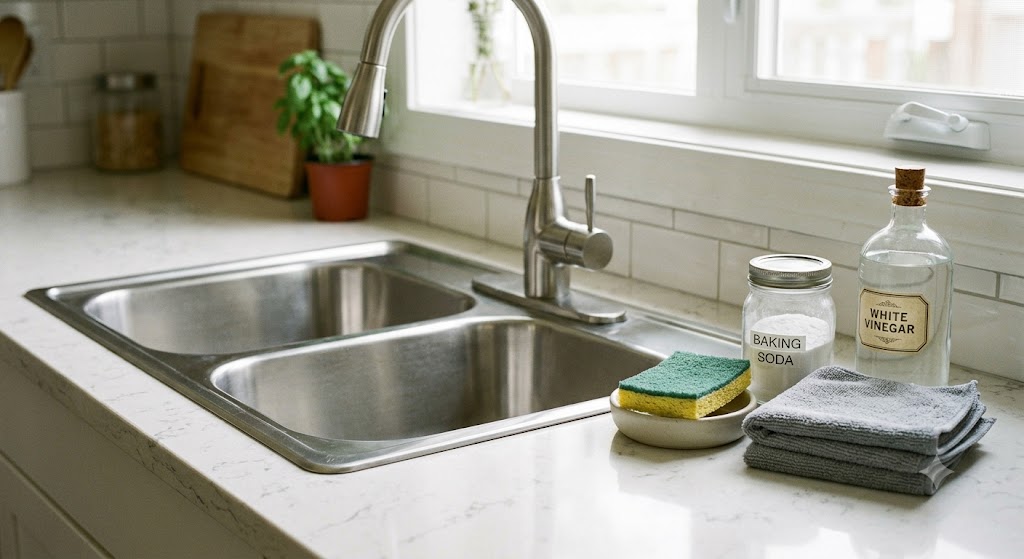
Most effective sink cleaning can be done using common household items.
Recommended supplies include:
- Baking soda
- White vinegar
- Dish soap
- Soft sponge
- Microfiber cloth
- Soft toothbrush
- Warm water
- Lemon (optional)
Avoid steel wool or abrasive scrubbers, as they can scratch many sink materials.
i think you should read, Kitchen Cabinet Height: Standard Sizes & Guide.
How to Clean Stainless Steel Kitchen Sink
Many homeowners search for how to clean stainless steel kitchen sink because fingerprints, water spots, and stains can quickly appear.
Daily Cleaning
For everyday maintenance:
- Rinse away food debris.
- Apply a few drops of dish soap.
- Wipe with a soft sponge following the grain of the steel.
- Rinse thoroughly.
- Dry completely with a microfiber cloth.
Cleaning with the grain helps preserve the sink’s natural finish.
Deep Cleaning
For tougher stains:
- Sprinkle baking soda over the sink.
- Scrub gently using a damp sponge.
- Spray white vinegar over the baking soda.
- Allow it to fizz for several minutes.
- Rinse well.
- Dry the sink.
- Polish with a few drops of olive oil on a microfiber cloth for added shine.
This method safely removes grime while restoring the stainless steel’s appearance.
How to Remove Tough Stains
Occasionally, kitchen sinks develop stubborn stains from coffee, tea, rust, or hard water.
Effective stain-removal methods include:
Baking Soda Paste
Mix baking soda with a small amount of water to create a paste.
Apply it to stained areas, let it sit for 10–15 minutes, then scrub gently before rinsing.
White Vinegar
Vinegar helps dissolve mineral deposits and hard water stains.
Spray affected areas and allow the solution to sit briefly before wiping clean.
Lemon Juice
Natural citric acid can brighten sink surfaces while leaving a fresh scent.
Simply rub half a lemon over stained spots and rinse afterward.
How to Eliminate Kitchen Sink Odors
Even a clean-looking sink can develop unpleasant smells.
To remove odors:
- Pour baking soda into the drain.
- Follow with white vinegar.
- Allow the mixture to fizz for 10 minutes.
- Flush with hot water.
For additional freshness, grind citrus peels in the garbage disposal if your sink has one.
Regular drain cleaning helps prevent recurring odors.
Mistakes to Avoid When Cleaning Your Sink
Using the wrong products or techniques can damage your sink over time.
Avoid these common mistakes:
- Using steel wool on stainless steel
- Leaving acidic cleaners on the surface for too long
- Mixing bleach with vinegar or ammonia
- Allowing standing water to remain overnight
- Using harsh abrasive powders regularly
Gentle, consistent cleaning is more effective than aggressive scrubbing.
How Often Should You Clean Your Kitchen Sink?
A simple schedule keeps your sink in excellent condition.
Daily
- Rinse after washing dishes.
- Wipe dry with a microfiber cloth.
Weekly
- Deep clean using baking soda and dish soap.
- Clean around the faucet and drain.
Monthly
- Disinfect the drain.
- Remove mineral buildup.
- Polish stainless steel if needed.
Regular maintenance prevents stubborn stains from developing.
Natural vs. Commercial Sink Cleaners
Both options can be effective depending on your needs.
Natural Cleaners
Benefits include:
- Eco-friendly
- Affordable
- Safe for frequent use
- Readily available
Popular choices include:
- Baking soda
- Vinegar
- Lemon juice
- Mild dish soap
Commercial Cleaners
These may work faster on heavy stains but should always be used according to the manufacturer’s instructions.
Choose non-abrasive products specifically designed for your sink material.
Tips to Keep Your Kitchen Sink Cleaner Longer
Small habits make a big difference.
Follow these tips:
- Rinse food residue immediately.
- Never leave dirty dishes overnight.
- Dry the sink after each use.
- Clean the drain weekly.
- Avoid pouring grease into the sink.
- Use a sink strainer to catch food particles.
These simple practices reduce stains, odors, and bacteria buildup.
FAQs
1. What is the best way to clean a kitchen sink?
The best method is to rinse the sink, scrub it with baking soda and dish soap using a soft sponge, rinse thoroughly, and dry it with a microfiber cloth. Weekly deep cleaning helps maintain a hygienic and spotless sink.
2. How do I clean a stainless steel kitchen sink without scratching it?
Always use a soft sponge or microfiber cloth and scrub in the direction of the steel’s grain. Avoid steel wool, abrasive pads, and harsh cleaners that may damage the finish.
3. Can I use baking soda and vinegar together?
Yes. Baking soda and vinegar create a gentle cleaning reaction that helps loosen grime, remove odors, and dissolve mineral deposits. Rinse thoroughly after cleaning to leave the sink sparkling.
4. How often should I deep clean my kitchen sink?
A deep cleaning once a week is ideal for most households. Daily rinsing and drying prevent stains, while weekly maintenance removes buildup before it becomes difficult to clean.
5. How can I make my stainless steel sink shine?
After cleaning and drying the sink, apply a few drops of olive oil or mineral oil to a microfiber cloth and buff the surface following the grain. This enhances shine while reducing fingerprints and water spots.
Conclusion
Knowing how to clean kitchen sink surfaces properly helps maintain a cleaner, healthier, and more attractive kitchen. Whether you’re learning how to clean stainless steel kitchen sink finishes or caring for another sink material, regular maintenance with gentle cleaning products is the key to lasting results. By following these simple cleaning techniques and preventive tips, you can keep your sink free from stains, odors, and bacteria while preserving its appearance for years to come. For even better kitchen hygiene, make sink cleaning a regular part of your weekly household routine.